

A DIY epoxy kit can make a tired garage floor look better for less money upfront, but the finished floor is not automatically comparable to a professional garage coating system. Homeowners comparing a DIY epoxy kit vs professional installation in Ohio should look beyond the price printed on the box. Concrete preparation, moisture, coating thickness, product chemistry, installation conditions, and topcoat quality all affect how long the floor actually lasts.
Ohio garages make those differences especially important. Road salt, wet tires, freeze-thaw cycles, vehicle traffic, temperature swings, and moisture moving through concrete can expose weaknesses that are easy to overlook during a weekend DIY project.
The Biggest Difference Is Usually Under the Coating
People often compare DIY and professional floors by looking at the coating itself. In practice, surface preparation can matter just as much as the product. Epoxy and other resinous coatings need a clean, mechanically sound concrete surface they can bond to. Oil contamination, curing compounds, weak concrete paste, old sealers, moisture, and an insufficient surface profile can all interfere with adhesion.
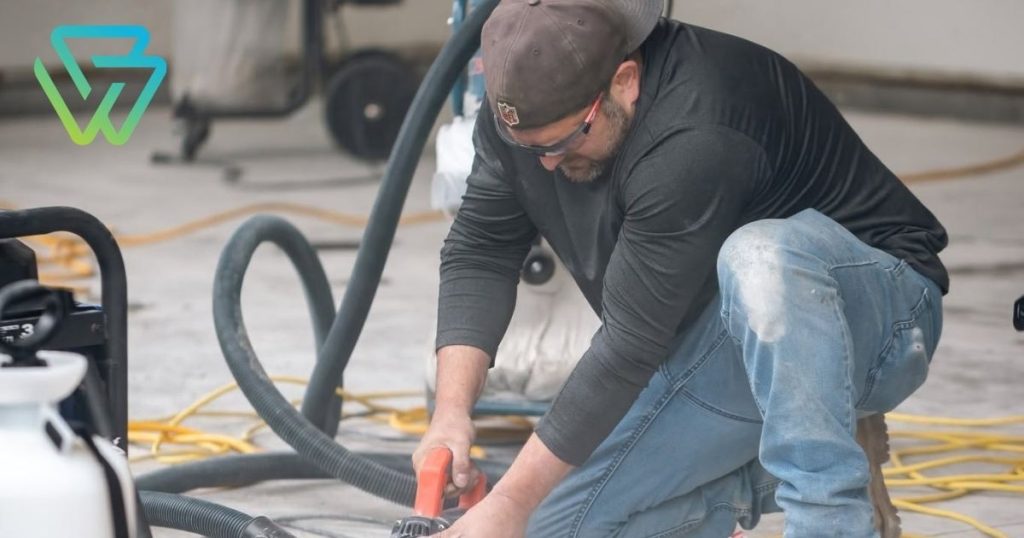
Many consumer kits rely on cleaning and acid etching because those methods are realistic for homeowners. Professional installers commonly use mechanical grinding with diamond tooling to remove weak surface material and create a more predictable profile.
A glossy coating applied over poorly prepared concrete can still look excellent on installation day. Problems may not appear until months later when tires, moisture, salt, and temperature changes begin stressing the bond.
Why DIY Epoxy Peels Even When the Instructions Were Followed
When homeowners ask why DIY epoxy peels, the answer is rarely as simple as “epoxy is bad.” Peeling often starts because the coating never achieved strong adhesion to the slab. Concrete may still contain oil deep in its pores, an invisible sealer may remain on the surface, moisture may be moving upward through the slab, or the floor may not have enough surface profile.
Application conditions matter too. Epoxy has specific temperature, humidity, mixing, and recoat requirements. Applying it when the slab is too cold, waiting too long between coats, stretching material farther than its recommended coverage rate, or mixing components inaccurately can reduce performance.
Professional installation does not eliminate every possible failure, but an experienced installer is better equipped to identify these risks before coating begins.
Rust-Oleum Garage Kit Problems Are Often System Problems
Searches for Rust-Oleum garage kit problems usually focus on peeling, hot-tire pickup, worn traffic lanes, fading, or areas where the coating appears thinner than expected. Those complaints do not necessarily mean every consumer kit will fail.
The larger issue is that a retail garage kit is designed around affordability and homeowner-friendly application. A professional floor is usually designed as a complete system around the condition and use of the concrete.
Coverage also matters. A box may technically cover a stated square footage, but stretching the material across the maximum advertised area can leave a relatively thin film. Thin sections have less material available to absorb wear from tires, tools, grit, snow equipment, and repeated cleaning.
Professional installers normally calculate material requirements based on the system being installed rather than simply trying to reach the largest possible square footage from each kit.
Big Box Epoxy Kit Failure Often Starts With Compromise
A big box epoxy kit failure may result from several smaller compromises happening at once. The concrete gets etched instead of ground. A crack gets filled with a basic repair product. Moisture is never evaluated. The coating is applied as thinly as possible to cover the entire garage. Decorative flakes are broadcast lightly. No high-performance topcoat is added.
Each shortcut may seem minor. Together, they can produce a floor that looks impressive initially but lacks the build, adhesion, or wear resistance expected from a professionally installed system.
A garage floor should therefore be judged as a layered system rather than by the word “epoxy” printed on the package.
Water-Based Epoxy VS 100 Percent Solids Epoxy
One major difference between consumer and professional products is solids content.
A water-based epoxy contains water that evaporates during curing. These products can be easier to apply, have lower odor, and work well for certain light-duty applications. They also typically leave a thinner cured film than higher-solids formulations.
100 percent solids epoxy contains little or no solvent or water that needs to evaporate. Most of the material placed on the floor remains as the cured coating, allowing installers to build greater thickness.
Thickness alone does not guarantee quality. Surface preparation, formulation, application technique, moisture conditions, and the rest of the coating system still matter. However, higher-build professional products generally give installers more options when designing a floor for heavier garage use.
Professional Garage Floors Are Rarely Just One Coat of Epoxy
The phrase “epoxy garage floor” can make professional installation sound like someone simply rolls epoxy onto concrete.
A quality system can involve much more.
The slab may first be mechanically prepared and repaired. Depending on the floor and system, installers may apply a base coat, decorative flake broadcast, protective clear coat, or other resinous layers engineered for abrasion, chemicals, UV exposure, and vehicle traffic.
Some garage floors use epoxy as part of the system. Others use polyurea, polyaspartic, urethane, or combinations of resin technologies.
The best coating is therefore not determined by which chemistry has the strongest marketing claim. It depends on how the entire system fits the slab and the environment.
Ohio Winters Put Garage Coatings Through More Abuse
Ohio garages experience conditions that can expose weak coating systems quickly.
Vehicles bring snow, water, grit, deicing chemicals, and road salt onto the garage floor. Meltwater can sit near tires or collect in low areas. Temperature changes cause concrete and coating materials to expand and contract at different rates.
Salt itself is only part of the issue. Abrasive grit trapped under vehicle tires can repeatedly grind against the coating, while freeze-thaw conditions can worsen existing concrete defects.
A professional garage floor installation in Ohio should account for those conditions when selecting preparation methods and coating layers.
Hot-Tire Pickup Is Not Just About Heat
One common garage coating complaint is material lifting where vehicle tires sit.
Warm tires can soften or stress some coatings, particularly thinner or poorly bonded films. Tires can also create substantial mechanical force against the floor as they cool.
Strong adhesion becomes critical in these areas. A coating that is properly bonded to mechanically prepared concrete is better positioned to resist tire-related stress than a thin film attached to a marginally prepared surface.
This is one reason tire marks, parking locations, and drive paths often reveal coating weaknesses first.
DIY Epoxy Can Still Make Sense for the Right Garage
Professional installation is not automatically necessary for every floor.
A DIY kit may be reasonable when the homeowner understands its limitations, the concrete is in good condition, the garage receives relatively light use, expectations are modest, and keeping the initial cost low is the main priority.
A workshop that rarely sees vehicles is different from a two-car garage used daily through an Ohio winter. A homeowner planning to move soon may also value the project differently from someone wanting a long-term floor system.
The mistake is expecting an inexpensive retail kit and a professionally prepared multi-layer coating system to deliver identical performance.
When Professional Installation Becomes the Better Value
Professional installation becomes easier to justify as the floor becomes more demanding.
Garages with heavy vehicle traffic, visible cracks, oil contamination, moisture concerns, worn concrete, previous coating failure, or strong expectations for long-term appearance are usually less forgiving of DIY mistakes.
Labor is also part of the comparison. Proper preparation can involve moving everything out of the garage, cleaning contaminants, repairing defects, profiling concrete, vacuuming dust, mixing material accurately, applying multiple layers, broadcasting flakes, scraping excess material, and respecting cure windows.
Homeowners are not only paying a contractor to roll on a coating. They are paying for equipment, product knowledge, preparation, installation control, and responsibility for the finished system.
Redoing a Failed DIY Floor Can Cost More Than Starting Professionally
The least expensive floor on day one is not always the least expensive floor over time.
When a DIY coating fails, the old coating often needs to be mechanically removed before another system can be installed. Removal adds labor because installers must grind through failing material before reaching clean concrete.
A homeowner may therefore pay for the original kit, spend a weekend installing it, live with the failure, and then pay additional preparation costs before receiving the floor originally wanted.
This does not happen with every DIY project, but it should be included in the cost comparison.
Questions to Ask Before Buying Any Garage Coating
Instead of asking only, “How much does the product cost?” consider what the floor actually needs.
Look at the condition of the concrete, previous coatings or sealers, oil contamination, cracking, moisture history, vehicle use, winter exposure, desired appearance, expected lifespan, and how much maintenance you are willing to accept.
The more demanding those conditions become, the more important professional surface preparation and system selection become.
DIY Epoxy Kit Vs Professional Installation: Which Should You Choose?
Choose a DIY epoxy kit when budget is the dominant concern, the concrete is straightforward, the garage receives lighter use, and you are comfortable accepting greater installation risk.
Choose professional installation when you want the floor prepared mechanically, need cracks or damaged areas addressed properly, expect frequent vehicle traffic, deal with Ohio winter conditions, or want a more substantial coating system designed around the slab.
The biggest difference is not simply DIY labor versus paid labor. It is a homeowner-friendly coating package versus a flooring system built around preparation, material compatibility, application control, and long-term use.
For many Ohio garages, those differences become far more noticeable after the first winter than they are on the first day.
Frequently Asked Questions
Are DIY epoxy garage kits actually epoxy?
Many are epoxy-based, although formulations vary considerably. Some retail products use water-based or lower-solids formulations designed to make application and cleanup easier for homeowners.
Why does garage epoxy peel under tires?
Peeling beneath tires can result from poor concrete preparation, contamination, weak adhesion, thin coating build, moisture, or stress from warm tires. Tire areas often reveal underlying bonding problems before less-used sections of the floor.
Is 100 percent solids epoxy better than water-based epoxy?
100 percent solids epoxy generally produces a thicker cured film because almost all applied material remains on the floor. Water-based epoxy can still work for lighter applications, but product chemistry should be considered alongside preparation and the complete coating system.
Can I put professional epoxy over a failed DIY coating?
Usually the failing coating should be removed first. Installing a new coating over material that is already losing adhesion can transfer the same problem into the new floor system.
How long does a professionally installed garage coating last?
Service life varies with the coating system, concrete condition, preparation quality, traffic, UV exposure, chemicals, and maintenance. Properly prepared professional systems are generally designed for significantly more demanding use than basic retail kits.
Is professional garage floor installation worth it in Ohio?
It often is for garages exposed to regular vehicles, road salt, snow, moisture, temperature changes, or heavy use. Professional preparation and a properly selected coating system can reduce many of the failure risks associated with thin DIY applications.