


A basement floor can look perfectly dry on inspection day and still deserve a closer look before coating. That is why basement epoxy flooring in Ohio should start below the finish. Pro Dynamic Floor Solutions considers concrete condition, moisture, previous treatments, cracking, and the future use of the room before the coating system is selected. The finished floor can then become part of the basement instead of feeling like leftover foundation concrete. It can work in recreation rooms, home gyms, laundry areas, workshops, storage rooms, utility spaces, and finished lower levels. More importantly, the project starts with what is happening in the slab.

Below-grade concrete lives in a different environment from an upper-level floor.
Ground moisture can move through concrete as vapor even when there is no puddle on the surface. Older Northeast Ohio homes may also have slabs built under different moisture-control standards than newer construction. That distinction matters before applying a basement epoxy coating.
A coating should not be used to hide an active water problem. Seepage from foundation issues, failed drainage, plumbing leaks, or recurring basement flooding needs to be addressed at its source.
A basement does not need visible flooding to raise moisture questions. A slab may appear dry while still transmitting vapor. That is why the condition of the concrete deserves attention before preparation begins.
Homeowners with apparently dry slabs still ask about moisture testing because previous flooding, house age, and missing vapor barriers can change the risk. The coating comes later. First, the floor needs to make sense for coating.
Basement slabs collect history. Old paint may remain around the edges. Adhesive can survive after previous flooring is removed. Cracks may have been patched years ago with unknown materials. Utility work can leave repaired sections that behave differently from the surrounding concrete.
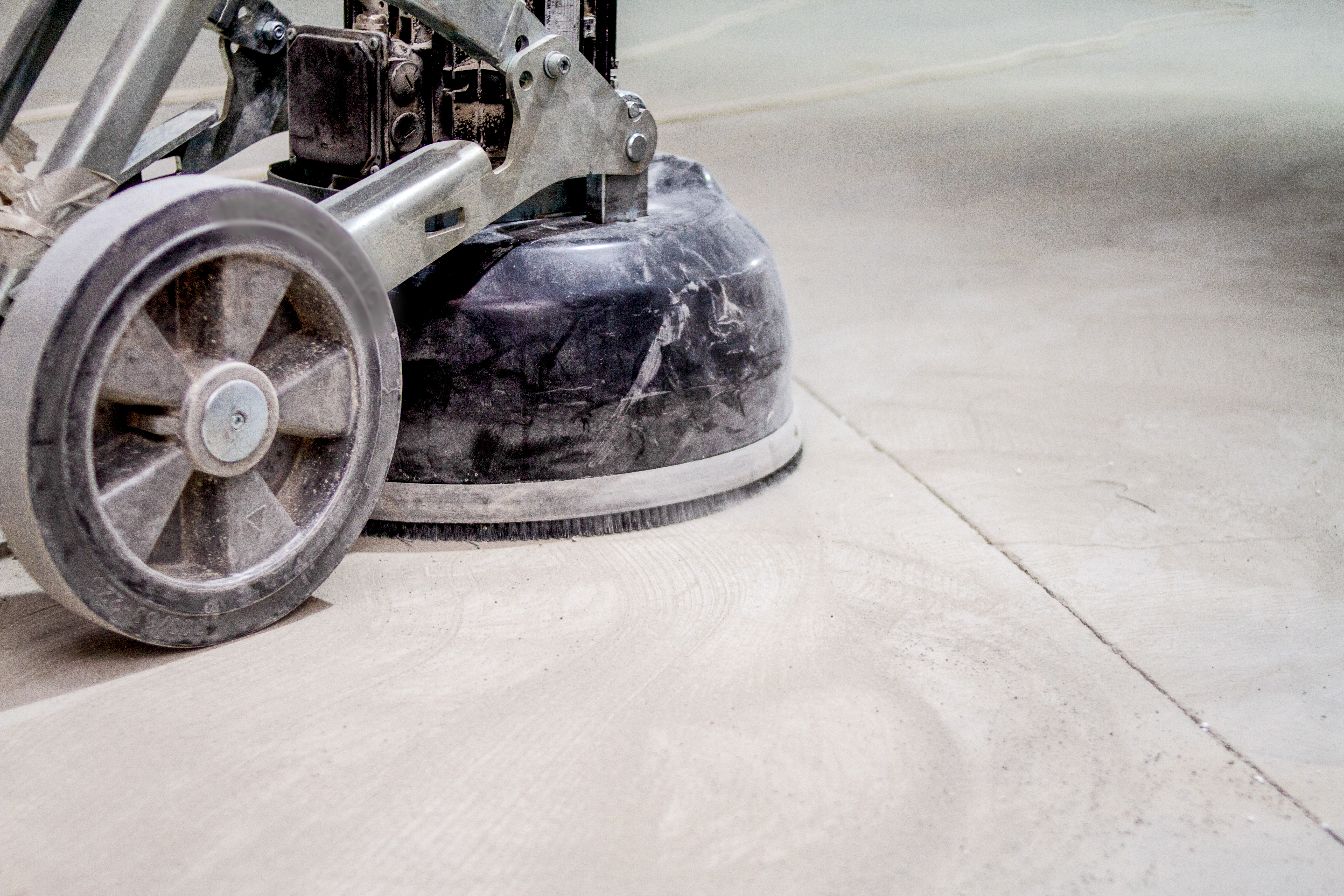
Those conditions cannot simply disappear beneath epoxy. Professional preparation creates the surface the new system needs for bonding. Existing coatings or weak material may require removal. Cracks and damaged sections need to be assessed before the finish covers them.
Mechanical preparation can also expose conditions that were less obvious beforehand. This is especially important when remodeling an older basement. Removing carpet, tile, or another floor covering can reveal stains, previous repairs, uneven areas, and concrete that has not been exposed for decades.
The concrete basement floor coating should be the final layer of a preparation plan, not the first attempt to cover whatever was left behind.
Concrete does not need to disappear beneath carpet or floating flooring for a basement to feel finished.
A coated slab keeps the concrete as the finished surface.
That can work particularly well in lower levels used for several purposes at once. One section might hold exercise equipment while another serves as a recreation area. Laundry or mechanical areas can remain part of the same floor without requiring an awkward material transition.
Cleaning becomes more straightforward because dust and spills stay on a finished surface rather than entering porous bare concrete.
There is also less concern about hiding routine spills inside absorbent flooring materials.
Still, epoxy does not make the slab warmer or softer. The finished surface follows the concrete below it. Area rugs or mats can still add comfort where people spend longer periods sitting or standing.
That tradeoff should be understood before installation. A basement floor works best when the material fits how the room will actually be used.
Basement design creates more freedom than many people expect.
A decorative flake floor can give the room visual variation and help disguise minor day-to-day dust between cleanings. Solid colors create a cleaner, more uniform field across the slab.
Metallic finishes can push the basement in a more decorative direction. They can suit entertainment rooms, finished lower levels, hobby spaces, or areas where the floor becomes part of the interior design.
Texture deserves equal attention. A laundry area or entrance that may receive water can benefit from a different surface profile than a dry recreation room. However, adding more texture can also change how easily the floor sweeps and mops. There is no universal best basement finish.
Lighting, wall colors, room size, furniture, cleaning habits, moisture exposure, and the intended use of the space should all influence the choice.

It depends on why the basement became wet. A past plumbing accident is different from recurring groundwater seepage or hydrostatic pressure. If water continues entering through the slab, foundation, or wall-floor joint, that source should be addressed before coating.
A basement that flooded years ago may still be suitable once the cause has been corrected and current slab conditions are checked. Do not assume a coating will solve active moisture entry. Epoxy flooring is a finished floor system, not a substitute for foundation drainage or waterproofing repairs.
A dry appearance does not tell the entire moisture story. Concrete is porous, and vapor can move through a slab without producing standing water. This deserves extra attention in older Northeast Ohio basements where the construction beneath the slab may be unknown.
Moisture conditions can affect coating selection and adhesion. Therefore, the slab should be evaluated as part of the project instead of relying only on what the floor looks like that day.
Many older basement slabs can be coated after suitable preparation and repair. However, not every crack means the same thing. Normal shrinkage cracks differ from areas showing continued movement or major structural concerns.
Existing patches also need attention because previous repair materials may not bond or prepare the same way as the surrounding concrete.
The floor should be assessed first. Repair work can then be planned before the coating hides the area.
While epoxy floors can be slippery when wet, we offer anti-slip additives that can be incorporated into the coating to enhance traction and safety.
The room itself should decide. Decorative flakes can work well when owners want visual variation and a less uniform appearance. Solid colors can give the basement a simpler interior look. Metallic systems make more sense when the floor is intended to become a major design feature.
Then consider texture. Laundry areas, workout spaces, and basement entrances may need different traction than a dry entertainment room. Lighting matters too. Basement spaces with limited natural light can make very dark finishes feel heavier across a large floor.
The best epoxy basement floor is therefore not one specific color or system. It is the finish that works with the room, concrete, maintenance expectations, and the people using the space.
A basement renovation can change almost everything above the concrete while leaving the floor as an afterthought. That is backwards. The slab covers the entire room. Its moisture condition affects what can go over it. Its cracks and old repairs remain underneath every finished surface. Its appearance also influences how complete the basement feels once the walls, lighting, and furniture are finished. Pro Dynamic Floor Solutions approaches basement epoxy flooring in Ohio from that foundation upward. If the basement is ready for more than bare concrete, start by finding out what the slab can support and which finish belongs on it.
Copyright © 2026 All Rights Reserved. Pro Dynamic Floor Solutions.