

A garage floor coating peeling in Ohio is rarely random. Most failures trace back to poor concrete preparation, moisture, contamination, weak coating products, incorrect application, or a floor system that was never suited for vehicle traffic in the first place. Ohio garages add another layer of stress. Snow, road salt, wet tires, freeze-thaw cycles, temperature swings, and repeated vehicle use can expose weak adhesion fast. A coating may look perfect after installation and still begin lifting months later if the bond beneath it was weak from day one. Understanding why coatings fail makes it easier to avoid paying for the same floor twice.
Peeling Usually Starts at the Concrete, Not the Surface
When epoxy lifts from a garage floor, homeowners often blame the topcoat.
The real problem is frequently underneath it.
Garage coatings depend on mechanical adhesion to concrete. If the surface is too smooth, dirty, sealed, damp, dusty, or contaminated with oil, the coating may never properly lock into the slab.
A coating can still cure and appear glossy even when adhesion is poor. Traffic eventually finds the weak areas.
Once one edge begins lifting, water, dirt, and tire movement can accelerate the failure.
Poor Concrete Prep Is One of the Biggest Causes of Delamination
Proper concrete prep before epoxy is one of the most important steps in a successful installation.
Concrete naturally develops a surface layer containing weaker cement paste, contaminants, curing compounds, and other materials that can interfere with bonding. Old garage floors may also contain years of automotive fluids, cleaners, sealers, tire residue, or previous coatings.
Simply washing the floor is rarely enough for a professional system.
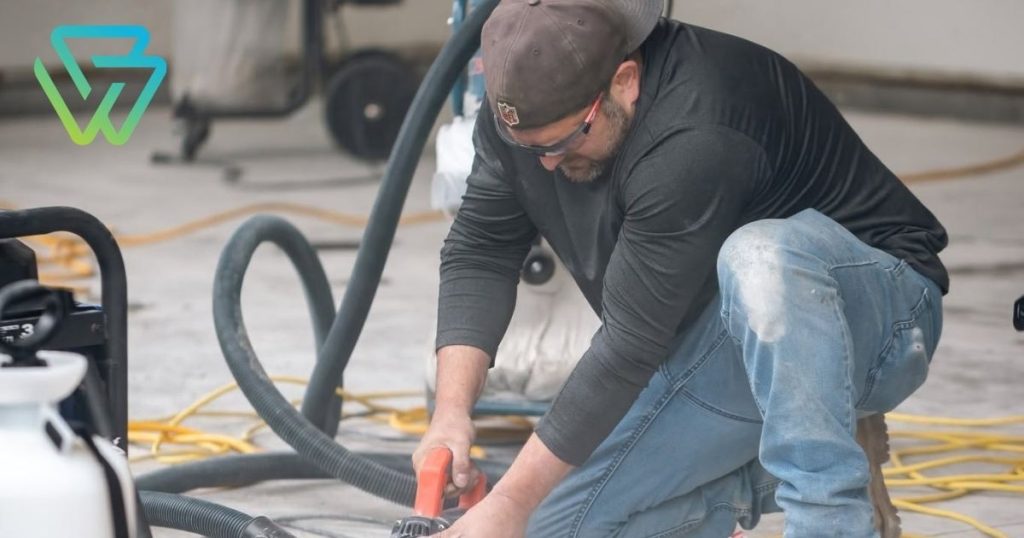
Mechanical grinding removes weak surface material and creates a profile that gives resin something to bond to. Diamond grinders are commonly used because they create a more controlled surface than basic cleaning or light etching.
Skipping this step can turn an otherwise good coating into a temporary finish.
Why Acid Etching Does Not Always Equal Proper Preparation
DIY kits often recommend acid etching because it is inexpensive and accessible.
Etching can open the surface of some concrete, but results are inconsistent. Concrete density varies, previous sealers may resist the acid, and contamination can prevent an even profile.
Grinding physically removes material instead of relying entirely on a chemical reaction.
Professional installers can also see what they are exposing as they work. Oil-stained areas, old coatings, weak concrete, repair patches, and inconsistent surfaces become easier to identify.
Surface preparation should be based on the actual slab rather than a one-size-fits-all instruction printed on a box.
Hot Tire Pickup Can Reveal Weak Adhesion
Hot tire pickup epoxy problems usually appear where vehicles park.
Tires become warm during driving. Once parked, heat and pressure transfer into the coating. As tires cool, they can grip the surface and place stress on the bond between the coating and concrete.
A strong coating system with proper preparation is designed to tolerate normal vehicle use. A thin or poorly bonded coating may lift directly beneath the tires.
The heat itself is not always the only cause.
Hot tires often reveal an adhesion problem that already existed.
If the coating pulls cleanly away from the concrete while leaving the slab underneath relatively smooth, poor surface preparation should be considered.
Why Epoxy Lifts Off Concrete in Sheets
When epoxy is lifting off concrete in large pieces, it usually indicates a serious bond failure.
Possible causes include inadequate profiling, moisture vapor, contamination, dust left after grinding, an incompatible primer, application over a sealer, or coating concrete before it was ready.
Large-sheet delamination is different from normal surface wear.
A worn coating may become scratched, dull, or thin over time. Delamination means the coating is separating from the substrate.
Once this happens, applying another coat over the failing material usually does not solve the underlying problem.
The loose coating must generally be removed before the floor can be rebuilt correctly.
Moisture Can Push a Coating Off From Below
Concrete may look dry while still transmitting moisture vapor.
Ground moisture can migrate upward through a slab and create pressure beneath coatings. If the floor system cannot tolerate that moisture level, blistering, bubbling, whitening, or delamination may follow.
Ohio basements and garages can be particularly vulnerable depending on drainage, slab construction, groundwater conditions, and seasonal weather.
Moisture problems cannot always be diagnosed by touching the surface.
Professional installers may evaluate the floor for warning signs and use moisture testing when conditions indicate a risk.
If moisture vapor is significant, the correct solution may involve a moisture-mitigation primer or a different coating approach rather than simply applying thicker epoxy.
Oil Contamination Can Survive Years of Cleaning
Garage floors absorb oil.
A stain that looks clean on the surface can still contain petroleum contamination inside the concrete pores. Grinding sometimes exposes additional contamination that was not obvious beforehand.
Oil reduces adhesion because coatings need direct contact with sound concrete.
Degreasers can help, but deeply contaminated slabs may require repeated treatment, additional grinding, specialized primers, or other corrective methods.
Ignoring a dark oil stain and coating straight over it creates an obvious weak point.
Those areas may later peel while the surrounding coating stays attached.
Dust After Grinding Can Ruin Good Preparation
Grinding the floor is not enough by itself.
The concrete must also be thoroughly cleaned afterward.
Mechanical preparation creates fine dust that can settle into the newly opened surface. If coating material bonds to dust instead of concrete, adhesion may still be poor.
Professional preparation typically includes industrial vacuuming and careful inspection before coating begins.
This detail is easy to underestimate because the floor can appear visually clean while still holding fine particles.
Strong adhesion requires a clean surface at the microscopic level, not simply a floor that looks swept.
Garage Floor Paint Failure Is Not the Same as Coating Failure
Many homeowners use “epoxy,” “floor paint,” and “garage coating” interchangeably.
They are not always the same thing.
Basic garage floor paint failure can happen faster because ordinary paint is generally thinner and less resistant to vehicle traffic, abrasion, automotive chemicals, and hot tires.
A decorative concrete paint may improve appearance, but it should not automatically be expected to perform like a professionally installed resinous flooring system.
Some retail products also use “epoxy” terminology even though their coating thickness, solids content, and intended performance differ significantly from professional systems.
The product label matters less than the chemistry and complete system behind it.
Incorrect Mixing Can Cause Soft or Weak Epoxy
Two-component coatings depend on chemistry.
The resin and hardener must be mixed at the correct ratio and blended thoroughly. Incorrect proportions can create soft spots, tacky areas, incomplete curing, or inconsistent strength.
Pot life also matters.
Once the components are mixed, the chemical reaction begins. Installers have a limited working period before viscosity increases and application quality drops.
Leaving mixed epoxy sitting in a bucket too long can accelerate heat buildup and shorten working time dramatically.
Professional crews organize the installation around these cure windows rather than mixing everything at once and hoping to finish before the product changes.
Temperature Can Change the Entire Installation
Coatings cure differently depending on temperature.
Cold conditions can slow curing. Excessive heat can shorten working time. Slab temperature can also differ from air temperature, especially in garages.
Ohio weather makes this particularly important during spring, fall, and winter installations.
The garage may feel comfortable while the concrete itself remains cold.
Professional installers follow product-specific temperature requirements and consider the slab, not simply the thermostat.
Applying material outside its recommended range can compromise flow, adhesion, curing, and overall performance.
Recoat Windows Matter More Than Many Homeowners Realize
Multi-layer floors require timing.
If the next layer is applied too early, the underlying coat may not be ready. If it is applied too late, chemical bonding between layers can weaken, and additional mechanical preparation may be required.
Every coating has a recoat window.
Professional installers coordinate base coats, flake broadcasts, scraping, topcoats, and cure times around those specifications.
A common DIY mistake is completing part of the project one weekend and returning later without realizing the previous layer now needs additional preparation.
Weak Concrete Can Fail Even When the Coating Bond Is Strong
Sometimes a coating appears to peel, but the actual failure occurs inside the concrete itself.
If pieces of concrete remain stuck to the underside of the coating, the coating may have bonded strongly enough to pull weak surface material away from the slab.
This is known as substrate failure.
Soft, deteriorated, previously damaged, or poorly finished concrete may require deeper grinding or repairs before coating.
A professional installer should evaluate the slab rather than assuming every floor needs the same preparation depth.
Road Salt and Winter Debris Increase Surface Wear
Ohio vehicles bring more than water into the garage.
Road salt, sand, grit, slush, and deicing chemicals collect beneath tires and along parking paths. Grit acts like an abrasive between rubber tires and the coating.
Over time, traffic lanes can become scratched or worn faster than unused sections.
A durable topcoat helps protect the decorative layer underneath, but no coating is completely immune to abrasion.
Regular cleaning matters because removing grit reduces the grinding action created every time a vehicle enters or leaves.
Crack Movement Can Damage Coatings
Garage floors often contain cracks before installation.
Some are stable shrinkage cracks. Others may continue moving with temperature changes, settlement, or structural conditions.
Coatings can bridge minor imperfections, but they cannot stop significant concrete movement.
Professional installers repair cracks using products selected for the floor and coating system. Even then, no responsible installer should promise that every moving crack can be permanently eliminated.
Understanding the type of crack matters more than simply filling it with whatever material is available.
How Professionals Prevent Garage Floor Coating Peeling
Professional prevention starts before any coating container is opened.
The installer evaluates the concrete, identifies existing coatings or sealers, checks contamination, looks for moisture concerns, repairs defects, and mechanically profiles the surface.
Dust is removed thoroughly before primers or base coats are applied.
The coating system is then installed according to product requirements for temperature, mix ratio, coverage, cure time, and recoat windows.
Professionals also choose products based on the actual garage rather than automatically using the same coating everywhere.
A lightly used residential garage and a high-traffic workshop may require different approaches.
Fixing a Peeling Floor Usually Means Removing the Failure
Peeling coatings rarely have an easy permanent patch.
Small isolated defects can sometimes be repaired, but widespread delamination usually requires removal of the failed material.
Grinding is commonly used to expose sound concrete again.
The slab should then be inspected to determine why the original floor failed. Recoating without identifying the cause risks repeating the same problem.
If moisture caused the first failure, additional grinding alone will not necessarily solve it. If oil contamination caused it, the affected concrete may need further treatment.
Failure analysis should come before replacement.
A Good Garage Coating Should Be Built From the Concrete Up
The most important part of a garage coating is the part homeowners barely see once the project is complete.
Strong floors begin with sound concrete, proper profiling, clean surfaces, compatible materials, correct application, and enough cure time.
Decorative flakes and glossy finishes come afterward.
For Ohio homeowners, choosing a garage coating based only on color or initial price can overlook the factors that actually determine whether the floor stays bonded through years of tires, road salt, moisture, and seasonal temperature changes.
A professionally installed system does not succeed because professionals have access to a magic coating.
It succeeds because the floor is treated as a complete system from concrete preparation through the final protective layer.
Frequently Asked Questions
Why is my garage floor coating peeling under the tires?
Tire areas place additional heat, pressure, and mechanical stress on the coating. Peeling in these spots can indicate poor concrete preparation, weak adhesion, insufficient coating thickness, or a product not suited for regular vehicle traffic.
Can moisture make epoxy peel off concrete?
Yes. Moisture vapor moving through concrete can create conditions that contribute to blistering or delamination. Floors with suspected moisture issues should be evaluated before a new coating system is installed.
Can I apply new epoxy over peeling epoxy?
Applying new material over loose coating is generally a poor solution. Failed sections normally need to be removed until the installer reaches securely bonded coating or sound concrete.
Does grinding prevent epoxy from peeling?
Mechanical grinding greatly improves adhesion by removing weak surface material and creating a suitable concrete profile. It does not solve every possible issue, such as excessive moisture or deep contamination, so the entire slab still needs evaluation.
Why did my garage floor paint start peeling after one winter?
Winter exposes garage floors to moisture, salt, grit, temperature swings, and frequent wet-tire traffic. Thin floor paint or poorly prepared coatings may not have enough adhesion or durability to withstand those conditions.
Can a professionally installed garage coating still fail?
Any coating can fail if the slab has serious moisture, structural, contamination, or movement problems. Professional installation reduces preventable risks by addressing preparation, product selection, environmental conditions, and installation procedures before the floor goes into service.