

Hot tire pickup happens when warm vehicle tires grip, soften, stain, or pull a weak garage coating from the concrete. It often appears as tire-shaped damage exactly where a vehicle parks. Cheap garage paint, thin coating films, poor concrete preparation, and driving on a floor before full cure all increase the risk. In North Royalton, Brunswick, and Strongsville garages, summer road heat can expose these weaknesses quickly. A properly prepared epoxy flooring system with suitable resin layers and a durable vehicle-rated finish is designed for far more demanding tire contact than ordinary garage paint.
What Hot Tire Pickup Actually Looks Like
Hot tire pickup is more specific than ordinary wear.
A weak coating may look fine across most of the garage while patches begin lifting beneath the four places where the tires normally rest. In severe cases, the coating separates from the slab and exposes bare concrete beneath the parking position.
Dark tire marks alone do not always mean the coating has peeled. Rubber or plasticizer staining can remain on top of an intact coating. Actual pickup means coating material has lifted or detached.
That distinction matters when diagnosing the floor. A stain may require cleaning or surface treatment, while widespread adhesion failure can point to a much larger problem underneath.
Why Hot Tires Attack Weak Garage Coatings
Vehicle tires contain compounds called plasticizers. These materials help keep rubber flexible instead of hard and brittle.
Driving creates heat through tire flex, road friction, braking, and warm pavement. Once the vehicle reaches the garage, the tire contact patch remains pressed against the coating while the rubber cools.
Technical guidance from Euclid Chemical identifies plasticizer migration as a major cause of tire marking and pickup on concrete sealers and coatings. Heated tire rubber can release plasticizers that migrate into the coating and contribute to discoloration or surface interaction. Euclid Chemical’s tire pickup technical bulletin explains this mechanism in detail.
Heat, chemistry, vehicle weight, and long contact time all meet in a tire-sized section of floor.
Plasticizer Migration Is Only Part Of The Failure
Homeowners sometimes hear that hot tire pickup comes entirely from tire chemicals. The complete problem is usually broader.
The coating must resist chemical contact with the tire while remaining hard enough under elevated temperature. It also needs a strong bond to the prepared concrete beneath it.
If one layer becomes soft or poorly bonded, the cooling tire can grip the surface strongly enough to expose the weakness.
This explains why hot tire pickup garage floor damage often appears in exact parking locations while surrounding areas remain intact. Those tire contact patches receive concentrated heat, pressure, chemicals, and repeated loading every day.
Garage Paint And Epoxy Are Not The Same Thing
Many products sold for garage floors use words such as epoxy, concrete coating, or heavy duty on the package. Those labels do not mean every product has the same resin content, film thickness, cure chemistry, or vehicle resistance.
A thin garage paint has very little material between the tire and the concrete. Once the film softens or its bond weakens, there is less resin available to absorb the stress.
Professional Garage Epoxy Flooring uses the floor as a complete system rather than treating the project like repainting a wall. Pro Dynamic Floor Solutions evaluates the slab, mechanically prepares the concrete, and can combine epoxy, decorative flake, and polyaspartic materials according to the garage and system requirements.
That difference becomes important after repeated summer parking cycles begin.
Film Build Changes How A Coating Performs
Film build describes the thickness of the cured coating layer.
A garage floor system may contain a primer or base resin, decorative flake, and a protective topcoat. Each layer has a purpose, and the total system build is different from a single thin coat of garage paint.
Thickness alone does not guarantee quality. Applying a coating thicker than its manufacturer allows can create curing problems of its own.
However, an adequately designed multi-layer system gives the garage more than a cosmetic surface. The resin chemistry, layer thickness, adhesion, cure, and topcoat work together.
Professional product specifications even place limits on coat thickness because incorrect film build can affect final hardness and tire-staining resistance. Westcoat, for example, warns that exceeding the specified dry-film thickness of one polyaspartic product can reduce hardness and increase tire-staining risk. Its technical specification also warns against vehicle traffic before the required cure period.
Concrete Prep Is What Keeps The Floor Attached
The best resin cannot compensate for a poor bond to the slab.
Garage concrete may contain laitance, old paint, oil, weak surface material, previous sealers, contamination, or dust. Rolling a coating over those materials means the resin may bond to something weaker than the concrete itself.
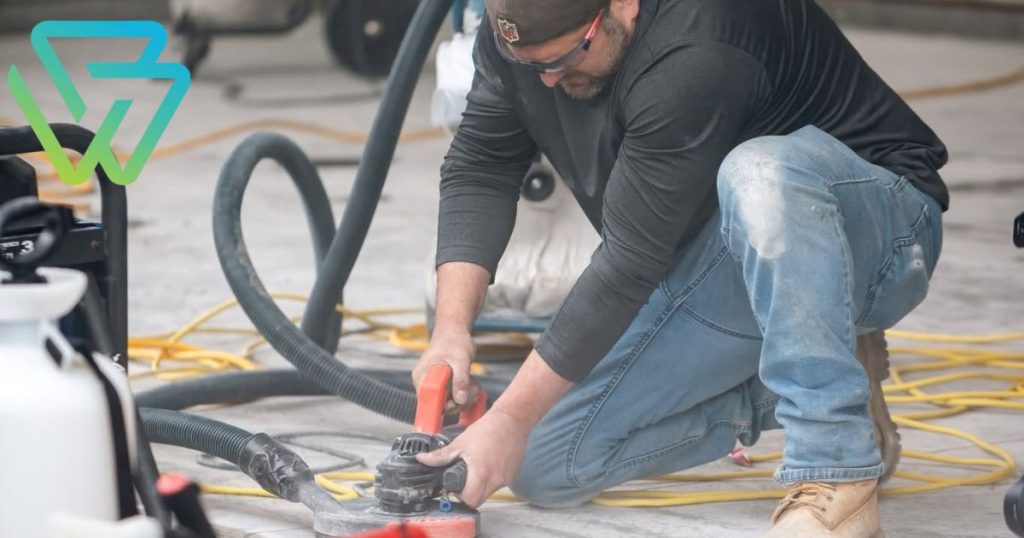
Mechanical preparation creates a surface profile and removes unsuitable material before coating begins.
Pro Dynamic Floor Solutions treats preparation as part of its Garage Epoxy Flooring system because the finished coating can only perform as well as the surface underneath it. The company’s garage process specifically accounts for oil contamination, old coatings, repairs, cracking, and concrete wear before the visible floor system goes down.
Hot tires often reveal weak prep because the tire contact area places concentrated stress on that bond.
Summer Makes Tire Contact More Demanding
Hot tire pickup can happen in many climates, but warm weather increases the challenge.
A vehicle traveling through Strongsville, North Royalton, or Brunswick on a hot Ohio afternoon arrives with tires already warmed by pavement and driving. The garage coating then receives that heat through four relatively small contact areas.
The floor itself may also be warm, especially near an open west-facing garage door.
The combination creates thermal cycling. The coating warms under the tire, then cools after the vehicle sits. Repeating this cycle hundreds of times can expose marginal resin chemistry or poor adhesion much faster than occasional foot traffic would.
A garage floor coating should therefore be selected for vehicle use, not simply for how glossy it looks after installation.
Cure Time Matters Before The First Drive-In
A floor can feel hard enough to walk on before it is ready for vehicle traffic.
Resin coatings continue developing their final properties during cure. Driving onto them too early places heat, pressure, and plasticizer exposure against a system that may not yet have reached its intended hardness.
This is one reason return-to-service instructions matter.
A professional epoxy floor installer should give separate expectations for foot traffic, replacing stored items, and parking vehicles when those times differ. The correct timeline depends on the actual coating chemistry, slab temperature, ambient conditions, and manufacturer requirements.
Ignoring the vehicle cure window can turn a properly selected product into a premature failure.
Tire Marks Do Not Always Mean Epoxy Is Lifting
A dark patch where the tires sit can have several causes.
Rubber transfer may leave a surface mark. Plasticizer migration may discolor some coatings without removing them. Dirt and road residue can also create tire-shaped staining.
Epoxy lifting under tires is different.
When coating has actually detached, the surface may show chipped edges, exposed concrete, bubbles, or film attached to the tire. Damage may continue spreading when loose coating around the failed section has weak adhesion.
The condition of the surrounding floor helps determine whether the issue is isolated or part of a broader coating failure.
Cheap Quotes Often Hide The Important Differences
Two contractors can describe both floors as epoxy while quoting very different systems.
One price may include mechanical concrete preparation, repairs, multiple resin layers, decorative flake, a vehicle-rated topcoat, and proper cure requirements. Another may involve minimal preparation and a much thinner coating.
The finished photos can look similar immediately after installation.
Hot tire exposure, Ohio winter moisture, road salt, repeated cleaning, and years of tire traffic reveal the difference later.
Pro Dynamic Floor Solutions recommends comparing what is actually included in a coating proposal instead of looking only at price per square foot. Its estimate guidance specifically notes that mechanical preparation, crack repair, system layers, and topcoat choice can create major differences between quotes.
A Tire-Resistant Floor Is A Complete System
There is no single ingredient called “hot tire protection.”
Resistance starts at the concrete. The slab needs suitable mechanical preparation and repairs where required.
The resin system then needs enough adhesion, hardness, chemical resistance, and correct film build for the garage environment. Each coat needs to cure correctly before the next stage and before vehicles return.
A durable topcoat adds another layer between tire rubber and the underlying system.
This is why Pro Dynamic Floor Solutions can use epoxy and polyaspartic materials in different parts of the same garage system instead of reducing the decision to one product name.
Polyaspartic And Epoxy Can Work Together
The epoxy-versus-polyaspartic debate often oversimplifies garage flooring.
Epoxy can provide a strong resin layer with useful build and bonding characteristics. Polyaspartic materials can offer fast curing and strong topcoat properties.
A properly designed floor may use both.
Pro Dynamic Floor Solutions specifically states that its Ohio garage systems can combine epoxy, decorative flake, and polyaspartic materials according to slab and project requirements.
For hot tire resistance, the useful question is not which name sounds more advanced. It is how the complete system handles preparation, cure, tire contact, chemicals, abrasion, and repeated thermal cycles.
Northeast Ohio Garages Face More Than Summer Heat
Hot tires are only one stress placed on an Ohio garage floor.
The same parking areas that receive warm tires in July may receive road salt, snowmelt, grit, and cold moisture in January. Vehicles repeat almost identical parking patterns through both seasons.
A weak coating therefore faces thermal and chemical stress throughout the year.
North Royalton, Brunswick, and Strongsville homeowners should consider the complete use cycle when comparing systems. A floor designed around actual vehicle traffic makes more sense than one selected only from a color chart.
This is also why slab preparation and system selection matter more than applying the cheapest material labeled for concrete.
What To Ask Before Hiring An Epoxy Contractor
A useful garage floor quote should explain how the concrete will be prepared and what coating layers will be installed.
Homeowners should also understand when vehicles can safely return, what repairs are included, how old coatings will be handled, and what topcoat protects the decorative system.
A vague promise that the product is “industrial strength” does not answer those questions.
The contractor should be able to explain the floor from the concrete upward. That conversation makes it easier to compare actual system quality instead of comparing two numbers that may cover very different work.
Frequently Asked Questions
What Causes Hot Tire Pickup On Garage Floors?
Hot tire pickup can occur when warm tires interact with a coating that lacks enough heat, chemical, or adhesion resistance. Plasticizer migration from heated rubber can contribute to staining and coating interaction. Poor preparation and premature vehicle traffic can make failure more likely.
Will Hot Tires Ruin A Proper Epoxy Floor?
A professionally selected and properly installed garage system should be designed around vehicle traffic, including warm tires. No coating is indestructible, but proper concrete preparation, suitable resin chemistry, correct cure, and a durable topcoat greatly reduce the risk of tire-related lifting.
Are Tire Marks The Same As Hot Tire Pickup?
No. Tire marks may involve rubber transfer or discoloration while the coating remains firmly attached. Hot tire pickup means the coating itself lifts or separates. Checking whether the resin is still present over the marked area helps distinguish the two.
Why Does Epoxy Lift Only Where Tires Sit?
Tire contact patches concentrate vehicle weight, heat, plasticizers, and long periods of contact in the same small areas. If the coating or its bond has a weakness, those parking positions may expose it before the rest of the floor shows damage.
Can Hot Tire Pickup Be Repaired?
Small isolated areas may sometimes be mechanically prepared and recoated if the surrounding system remains firmly bonded. Widespread peeling can indicate poor adhesion or an unsuitable coating throughout the garage. The existing floor should be evaluated before deciding whether patching makes sense.
How Long Before I Can Park On A New Coating?
The correct vehicle return time depends on the products, temperature, humidity, slab conditions, and complete system. Walking on a floor does not automatically mean it is ready for hot tires. Follow the installer’s specified vehicle cure time rather than guessing from surface hardness.
Park On A Garage Floor Designed For Tire Traffic
A garage coating should not need special treatment every time a vehicle returns from a summer drive through Strongsville, Brunswick, or North Royalton.
Hot tire pickup usually exposes something beneath the appearance: weak preparation, unsuitable resin, insufficient cure, poor film build, or a coating that was never designed for repeated vehicle contact.
Pro Dynamic Floor Solutions builds its garage systems around the concrete, expected use, preparation, and coating layers instead of treating the project as simple garage paint. Contact Pro Dynamic Floor Solutions to request a free estimate and compare a complete garage coating system built for actual Ohio vehicle traffic.