
Basement floor epoxy usually gives Ohio homeowners a stronger, more durable finish than ordinary concrete floor paint, but only when the slab is suitable for coating. Paint forms a thinner film and can peel when moisture, efflorescence, weak concrete, or poor preparation interfere with adhesion. Epoxy basement flooring creates a harder, more seamless surface, yet it is not a substitute for fixing active water intrusion or hydrostatic pressure. In Medina, Wadsworth, and Fairlawn basements, the first decision should therefore be about the concrete and moisture conditions underneath the finish, not simply epoxy versus paint.
Why Ohio Basement Floors Need A Different Approach
A basement slab sits below grade, so its moisture risks differ from a garage or first-floor concrete surface. Water vapor can move through the concrete from the soil below, while foundation drainage, groundwater, plumbing leaks, or recurring seepage can create additional moisture.
Northeast Ohio also sees wet springs, snowmelt, humid summers, and repeated seasonal changes. Those conditions do not automatically mean a basement floor is too wet to coat, but they make moisture evaluation important before covering the slab.
Our Residential Floor Coatings approach starts with this distinction. A basement coating should finish suitable concrete, not disguise active drainage, flooding, or foundation problems.
Why Basement Floor Paint Often Starts Peeling
Concrete floor paint can work on a properly prepared, dry slab. The problem begins when paint is treated as an easy cover for concrete that has moisture or adhesion problems.
Basement concrete paint problems often appear as bubbles, flakes, curling edges, or entire sections releasing from the slab. Moisture moving through concrete can weaken the bond between the paint film and the surface.
Efflorescence is another warning sign. These white mineral deposits appear when water travels through masonry or concrete and carries dissolved salts toward the surface. Continued moisture movement can contribute to blistering and peeling rather than allowing a new film to stay firmly attached.
Simply painting over the damaged area usually restarts the same cycle.
Epoxy And Paint Are Different Flooring Systems
Floor paint and professional epoxy are not simply different versions of the same product.
Concrete paint typically creates a relatively thin decorative film. It can improve appearance and make bare concrete easier to clean, but its resistance to abrasion, impacts, chemicals, and repeated wear depends heavily on the specific product.
Epoxy uses reactive resin chemistry that cures into a harder flooring layer. A professional system may also include primers, decorative layers, flakes, quartz, or other compatible components depending on the basement.
Pro Dynamic Floor Solutions offers Basement Epoxy Flooring in solid colors, decorative flake, metallic, and quartz finishes. The service also places surface preparation before epoxy application rather than treating the coating as ordinary paint.
Moisture Resistance Does Not Mean Waterproofing
This is one of the most important distinctions when comparing basement floor epoxy vs paint.
Once cured, epoxy creates a seamless, non-porous surface that resists spills and moisture coming from above. That can make the finished basement floor easier to maintain than porous bare concrete.
Moisture coming through the slab is a different problem.
Water vapor can exert pressure beneath a low-permeability coating. Excessive slab moisture can cause coatings to blister, debond, or deteriorate after installation. ASTM F2170 specifically addresses internal relative humidity testing because moisture moving through concrete can affect floor coatings and other finished flooring systems.
A coating should therefore never be marketed as a cure for an unresolved wet basement.
What Vapor Drive Means Under A Basement Floor
Vapor drive describes moisture vapor moving from an area of higher vapor pressure toward an area of lower vapor pressure.
In a basement, moisture in the soil beneath or around the slab can move toward the drier interior. Concrete is porous enough for that vapor movement to occur even when liquid water is not visible on the surface.
Once a coating covers the concrete, vapor can no longer escape through the surface as freely.
If the vapor level exceeds what the coating system can tolerate, pressure and moisture can accumulate at the bond line. The result may appear as bubbles, peeling, discoloration, or complete loss of adhesion.
This is why the floor may look dry during a Medina estimate yet still deserve closer moisture evaluation.
Epoxy Is Usually Not A Breathable Coating
The phrase “breathable epoxy” can create confusion.
Standard epoxy systems generally have relatively low permeability compared with bare concrete. Their ability to create a dense, seamless surface is part of what makes them useful as flooring.
However, that also means the installer needs to understand moisture conditions before closing the surface.
Some specialty systems are designed to tolerate higher moisture levels, while other projects may require a moisture barrier primer or mitigation system beneath the decorative flooring. The correct approach depends on measured slab conditions and the product limits.
Choosing epoxy should therefore come after evaluating the concrete, not before.
When A Moisture Barrier Primer Is Needed
A moisture mitigation primer is not automatically required on every Ohio basement floor.
Its purpose is to help manage vapor transmission where testing shows that a standard resin system should not be applied directly to the slab. Product selection must follow the measured condition and the requirements of the flooring system installed above it.
This is different from trying to stop active groundwater with coating.
A moisture-control system can address certain vapor conditions within its rated limits. Standing water, active leakage, failed foundation drainage, or hydrostatic pressure may require building or drainage corrections first.
ASTM guidance for vapor retarders also distinguishes between limiting water vapor transmission and true waterproofing. A vapor retarder beneath a slab is not intended to solve hydrostatic pressure by itself.
Hydrostatic Pressure Changes The Decision
Hydrostatic pressure occurs when groundwater places physical pressure against the foundation or slab.
A basement coating cannot be expected to hold back an unlimited water source from underneath. Painting or epoxying over a floor with active water intrusion can trap the symptom temporarily while the underlying condition remains.
Warning signs can include recurring damp areas, water entering at wall-floor joints, persistent efflorescence, visible seepage, or coating failures that return in the same locations.
Those conditions deserve investigation before another basement floor coating goes down.
For Ohio homeowners, the right answer may involve drainage or foundation work before any decorative floor system becomes part of the project.
Efflorescence Should Be Treated As A Clue
White powder on basement concrete is easy to dismiss as dust.
Efflorescence forms when moisture moves through concrete or masonry, dissolves salts, and leaves those salts behind as water evaporates. Removing the white material may improve appearance, but it does not explain why moisture reached the surface.
Persistent efflorescence should therefore influence the coating conversation.
Sherwin-Williams identifies both moisture movement and efflorescence as common causes of coating failure on concrete floors. It also recommends finding and correcting the moisture source when dampness is present before repainting.
The same principle applies before professional epoxy flooring.
Preparation Gives Epoxy Another Advantage
Basement paint projects are often approached as cleaning, etching, and rolling on another coat.
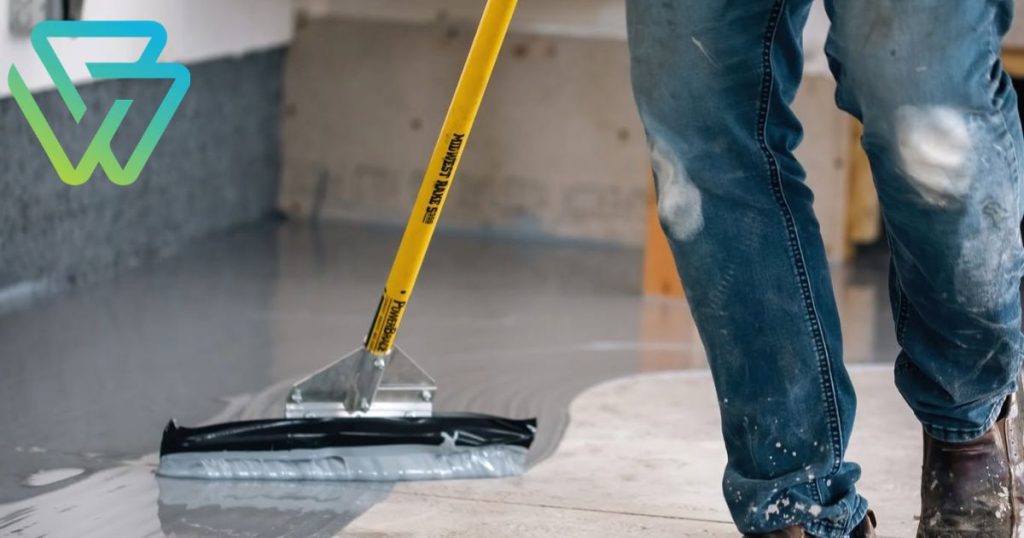
Professional epoxy floor installation can involve a much deeper preparation process. Existing paint or adhesive may need removal. Weak concrete, stains, cracks, or previous repairs can become visible once the old finish is gone.
Mechanical surface preparation then creates a suitable profile for the new resin system.
Pro Dynamic Floor Solutions specifically notes that older basement slabs may hide old paint, adhesive, repairs, cracking, stains, and moisture concerns. Those conditions affect preparation before the final finish is chosen.
A beautiful epoxy finish only helps when it bonds to concrete worth coating.
Old Basement Paint Usually Needs To Come Off
A new epoxy system should not depend on weak old paint underneath it.
If existing paint already flakes, bubbles, or releases from the concrete, covering it does not restore the original bond. The new coating may attach well to the paint while the old paint continues separating from the slab.
That leaves the entire system dependent on the weakest layer. Peeling material should be removed until a sound substrate remains. The condition of the concrete can then be evaluated more accurately before repairs and preparation continue.
For older Fairlawn or Wadsworth basements that have been repainted several times, this step can reveal why previous finishes kept failing.
Epoxy Handles Basement Use Better Than Thin Paint
Basements often become more than storage rooms.
Exercise equipment, workshops, laundry areas, recreation rooms, furniture, shelving, pets, and normal foot traffic can all place wear on the floor. A thin painted film may begin showing scratches and worn traffic paths much earlier.
A properly selected epoxy flooring system provides a thicker, harder wearing surface.
Pro Dynamic Floor Solutions offers decorative flake, solid epoxy, metallic finishes, and quartz systems through its Basement Epoxy Flooring service. Those options allow the finish to follow how the basement will actually be used instead of treating every lower level like a utility room.
Paint Can Still Make Sense In Some Basements
Epoxy does not need to win every flooring decision.
Concrete paint may make sense when the homeowner wants an inexpensive cosmetic improvement in a dry, lightly used space and accepts that maintenance or repainting may come sooner.
The slab still needs to be compatible with the selected product. Moisture, contamination, poor preparation, and efflorescence can damage paint just as they can affect more expensive flooring.
Sherwin-Williams specifically advises against painting basement floors when moisture continues coming through the slab until the source has been addressed.
Paint is therefore a budget finish, not a shortcut around concrete problems.
Epoxy Makes More Sense For Finished Basements
The decision changes when the basement is becoming permanent living space.
A recreation room, home gym, finished lower level, workshop, or entertainment area usually benefits from a surface intended to remain in service for years rather than another thin paint film.
Epoxy also opens more design options.
Decorative flakes can create a more forgiving pattern. Solid colors provide a cleaner, uniform finish, while metallic systems can make the concrete itself part of the room design.
Our broader Residential Floor Coatings service considers appearance alongside room use, traction, cleaning, existing slab condition, and moisture instead of choosing the finish from color alone.
Ohio Basements Should Be Checked Before Pricing
Square footage does not tell the full story.
Two 800-square-foot basements can require very different preparation. One may contain clean bare concrete with no obvious moisture concerns. Another may have several coats of peeling paint, adhesive residue, cracks, efflorescence, and damp areas.
Those differences change the installation.
Pro Dynamic Floor Solutions’ estimate guidance specifically identifies below-grade moisture as an issue that deserves closer attention in basement projects. Homeowners should mention visible peeling, moisture, staining, cracking, or previous flooring during the estimate so the slab can become part of the recommendation.
The useful quote is the one based on the actual floor rather than only its dimensions.
Frequently Asked Questions
Is Epoxy Better Than Paint For Basement Floors?
Epoxy generally provides greater durability, abrasion resistance, and design flexibility than ordinary concrete floor paint. However, neither product should be installed over unresolved moisture problems. The slab condition should determine whether epoxy is suitable.
Will Epoxy Stop Water Coming Through My Basement Floor?
Epoxy should not be treated as a cure for active water intrusion or hydrostatic pressure. It resists moisture and spills from above, but moisture moving through the slab can cause adhesion problems. Active water sources should be identified before coating.
Why Does Basement Floor Paint Keep Peeling?
Common causes include moisture movement, efflorescence, contamination, weak concrete, insufficient preparation, or using a coating unsuitable for the conditions. Repainting without correcting the cause often leads to another failure.
Can Epoxy Go Over Existing Basement Paint?
Only when the existing coating is firmly bonded and compatible with the new system, and even then preparation requirements apply. Peeling or weak paint usually needs removal because new epoxy cannot strengthen the old paint’s bond to the concrete.
What Is Efflorescence On A Basement Floor?
Efflorescence is a white mineral deposit left when moisture travels through concrete and evaporates at the surface. Persistent deposits can signal ongoing moisture movement. The source should be understood before installing another floor coating.
Does My Basement Need A Moisture Barrier Primer?
Not every basement does. The need depends on slab moisture conditions, the selected coating system, and manufacturer limits. Elevated moisture may require a compatible mitigation primer or another flooring approach, while active water intrusion may need correction before coating.
Find Out What Your Ohio Basement Slab Needs
Choosing basement floor epoxy vs paint should begin underneath both finishes.
A dry, sound slab used as a simple utility space may have several workable coating options. A finished basement with peeling paint, efflorescence, old adhesive, or suspected vapor drive needs a closer look before another layer covers the concrete.
For homeowners in Medina, Wadsworth, Fairlawn, Brunswick, and surrounding Northeast Ohio communities, Pro Dynamic Floor Solutions can evaluate the basement based on its existing condition, intended use, and moisture concerns. Contact Pro Dynamic Floor Solutions for a free flooring estimate and to determine whether additional moisture testing or mitigation should be part of the project before a new basement coating is installed.