

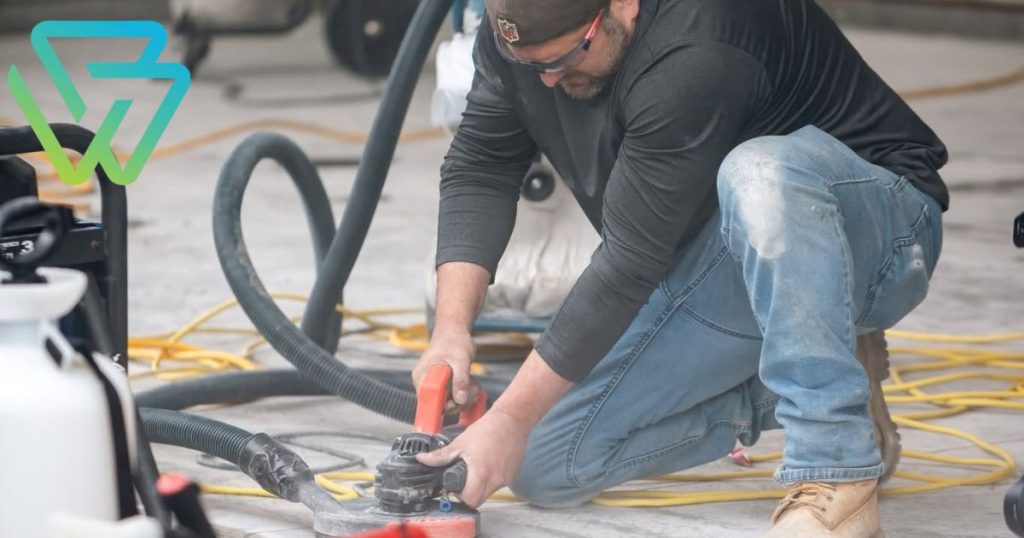
Concrete floor prep before epoxy means removing everything that can weaken the bond, exposing sound concrete, creating the correct surface profile, repairing suitable defects, and cleaning the slab before coating begins. For garages and residential floors around Parma, Garfield Heights, Cleveland, Medina, and Brunswick, this step matters even more because older Ohio concrete may carry years of road salt, moisture, stains, repairs, and previous coatings. A professional epoxy floor installation should never begin with resin being rolled over whatever happens to be on the floor. The coating needs properly prepared concrete underneath it.
Why Epoxy Flooring Depends On The Concrete Below
The finished coating gets the attention because it is the part homeowners see. The prepared slab underneath usually determines how well the system can bond.
Concrete may appear solid while still carrying laitance, curing compounds, old sealer, paint, oil, weak surface material, or embedded contamination. Northeast Ohio garage slabs can add salt residue, winter moisture, and years of tire traffic to that list.
Pro Dynamic Floor Solutions treats preparation as part of the flooring system for exactly this reason. Our Garage Epoxy Flooring process considers old coatings, contamination, cracking, repairs, and surface wear before the new system covers the slab.
A clean-looking floor is not necessarily a coating-ready floor.
Concrete Surface Profile Is More Than Roughness
Professional floor preparation creates what the industry calls a concrete surface profile, or CSP.
CSP describes the texture left after concrete has been mechanically prepared. The International Concrete Repair Institute uses reference profiles ranging from relatively smooth surfaces to very aggressive exposed profiles. Different coating thicknesses and systems require different levels of texture.
The point is not to make concrete as rough as possible.
The point is to create the profile required by the specific resin system being installed. Too little preparation can reduce mechanical bond. Excessively aggressive preparation can remove unnecessary concrete, increase material use, or leave a texture unsuitable for the planned coating.
Many resin flooring products call for mechanically prepared surfaces in roughly the CSP 2 to CSP 4 range, although the exact requirement depends on the system. For example, one professional epoxy system specifies CSP 3 to 4 before installation.
Diamond Grinding Opens The Concrete Surface
Diamond grinding is one of the most useful tools for residential epoxy floor preparation.
A floor grinder uses rotating diamond tooling to remove the upper concrete surface. It can strip many old coatings, remove weak laitance, flatten some high spots, and create an open texture for the coating system.
This is different from lightly scratching the concrete.
The grinder needs suitable tooling, passes, and extraction equipment to produce a consistent surface. Professional guidance identifies diamond grinding as an accepted mechanical method for profiling concrete and removing coatings or surface contamination.
For many Parma, Cleveland, and Garfield Heights garages, grinding is especially useful because the slab may not start as clean new concrete. Old paint, coating residue, worn areas, stains, and decades of use can all change the preparation needed.
Dust Extraction Is Part Of Proper Grinding
Grinding concrete creates fine dust. Leaving that dust across the floor defeats part of the preparation work.
Professional dust extraction grinding connects the grinder to a capable collection system so concrete dust is captured as the floor is profiled. The remaining surface must then be thoroughly vacuumed before resin is installed.
Dust left inside the profile can act as a weak layer between the epoxy and the concrete.
Sika’s surface-preparation guidance specifically calls for capable dust collection during grinding, while epoxy installation instructions also require remaining dust and debris to be vacuumed before coating.
When homeowners compare epoxy flooring contractors, the grinder is only half of what they should notice. The dust-control and final cleaning process matter too.
Acid Etch Vs Grinding Is Not An Equal Comparison
Acid etching was once common for preparing residential concrete. Modern resin flooring guidance increasingly favors mechanical preparation instead.
An acid reacts chemically with the cement paste at the surface. It may roughen concrete, but the result can vary across the slab. Areas with different density, contamination, previous treatments, or finishing conditions may react differently.
Acid preparation can also introduce water and may leave residue behind if the surface is not neutralized and cleaned correctly.
Sherwin-Williams’ resin flooring technical guidance advises avoiding acid etching because it can create an inconsistent profile and leave bond-inhibiting residue. It also notes that modern thicker resin systems commonly require more substantial CSP profiles than etching typically produces.
Diamond grinding and shot blasting physically remove material. That gives the installer far more control over what remains underneath the epoxy floor coating.
Laitance Must Come Off The Slab
Laitance is a weak surface layer containing very fine cement and aggregate particles.
It can form at the top of concrete during finishing and curing. The surface may look intact, but it is not the same as the strong concrete beneath it.
Coating over laitance means the epoxy may bond to that weaker layer rather than the sound slab.
Proper mechanical preparation removes laitance and exposes stronger concrete below. Professional resin flooring guidance consistently calls for a clean, sound, laitance-free surface before coating.
This is one reason a freshly poured slab should not be assumed ready simply because nothing has been spilled on it.
Shot Blasting Has A Different Job
Shot blasting prepares concrete by propelling small steel media against the floor at high speed. The machine then recovers the media while dust collection removes debris.
It can quickly produce a uniform profile across larger areas and is widely used for commercial and industrial resin flooring. It may also make sense on residential projects depending on slab size, coating requirements, and existing surface conditions.
Shot blasting can create stronger profiles than typical diamond grinding. Professional preparation charts associate light and medium shot blasting with several CSP levels used for thicker resin systems.
The machine itself is not proof of better preparation.
The correct tool is the one that gives the selected coating system the surface it requires.
Crack Repair Happens After The Slab Is Exposed
Grinding often reveals cracks more clearly.
Some cracks were hidden by dirt or old coating. Others may appear minor until the surrounding weak concrete is removed.
Crack chasing involves mechanically opening or cleaning a crack so the repair material can reach a properly prepared section instead of sitting loosely across the top. The installer can then fill appropriate cracks with a repair product compatible with the flooring system.
Not every crack should receive the same treatment.
Stable shrinkage cracks are different from actively moving cracks, settlement, or major structural movement. Pro Dynamic Floor Solutions evaluates existing damage before coating rather than presenting epoxy as structural concrete repair. That distinction is especially important in older Cleveland-area garages.
Homeowners considering several concrete areas can also review our Residential Floor Coatings approach, where preparation changes according to slab history, moisture, existing damage, and prior finishes.
Joints Should Not Be Treated Like Random Cracks
Control joints and cracks may look similar to a homeowner, but they serve different purposes.
A control joint was intentionally placed to influence where shrinkage movement occurs. Filling, bridging, or coating joints without understanding their purpose can create problems later when the slab moves.
Joint fill therefore needs to follow the floor system and joint type.
A professional epoxy flooring company should identify joints separately from ordinary surface cracking during the estimate. Simply filling every visible line with one repair material is not a complete preparation plan.
The difference matters because coatings are strong, but they do not stop concrete from moving underneath them.
Oil And Contamination Need Separate Attention
Grinding is not a substitute for proper decontamination.
Oil can penetrate concrete pores. Old garages around Parma or Garfield Heights may have received years of engine fluids, cleaners, tire residue, paint, or other chemicals before the homeowner considers epoxy flooring.
Grinding a contaminated surface without addressing the contamination can spread material or expose deeper affected concrete.
Professional surface-preparation guidance recommends assessing contaminants before mechanical profiling. In some cases, cleaning comes first, and additional decontamination may follow preparation. Severely contaminated concrete may require removal rather than simply being covered.
A crew should therefore inspect stains before deciding how aggressively to grind.
Moisture Cannot Be Ground Away.
Mechanical preparation improves the surface. It does not fix moisture moving through a slab.
A basement in Cleveland may have below-grade moisture concerns. A garage slab may receive water near the door or around cracks and joints. Other concrete may have vapor movement coming from beneath the slab.
Those conditions deserve attention before epoxy installation.
Our Residential Floor Coatings page makes the same distinction: a coating should not be used to hide unresolved water problems simply because the finished surface looks uniform.
A responsible estimate should therefore consider visible moisture, slab history, drainage, and other warning signs before specifying the system.
What Proper Prep Should Look Like On Install Day
Homeowners do not need to become flooring contractors to recognize a serious preparation process.
Before coating begins, the crew should be working on the concrete rather than simply washing it and opening buckets. Existing coatings or weak surface material should be removed as required. Areas needing crack or surface repair should become visible during preparation.
Grinding equipment should be paired with dust extraction. Edges and sections large equipment cannot reach should also receive mechanical attention rather than being left smooth beside the walls.
After preparation, the floor should look consistently open and mechanically abraded instead of glossy or sealed.
The crew should then remove remaining dust before primer or resin touches the slab.
Those steps take time because they create the surface the coating must depend on for years.
Cheap Prep Can Make A Cheap Quote Expensive
Two epoxy floor coating installers can quote the same garage and appear to be selling similar finished floors.
The difference may be underneath.
A quote that reduces labor by skipping mechanical preparation, using inadequate equipment, ignoring old coating residue, or coating over weak concrete can look attractive before installation. The homeowner may not see what was omitted once decorative flake and topcoat cover everything.
Bond failures usually make those savings much less impressive.
Proper preparation requires equipment, diamond tooling or blasting media, dust extraction, labor, repairs, cleanup, and experienced judgment about the slab. Those items are part of the flooring system rather than optional extras.
Price comparisons make more sense when homeowners compare preparation scope alongside coating materials.
Ohio Garage Concrete Brings Extra Prep Problems
Northeast Ohio gives garage slabs a difficult history.
Vehicles carry salty winter slush into garages around Cleveland, Parma, Garfield Heights, Medina, and Brunswick. Water runs toward cracks and low areas. Abrasive grit collects near entrances, while freeze-thaw exposure can worsen existing surface deterioration near colder edges.
Older slabs may show pitting or weakened areas before grinding begins.
The preparation process therefore needs to identify damaged concrete instead of hiding it below a new finish. Loose material must be removed until the coating system has a sound substrate to support it.
Our Garage Epoxy Flooring service is built around evaluating the existing garage first because Ohio slabs rarely arrive with identical conditions.
Preparation Determines More Than Adhesion
Prep also affects how the finished floor looks.
High spots, old repairs, coating edges, cracks, and inconsistent surface texture can remain visible through some resin systems if they are not addressed first. Shot-blast tracking or overly aggressive preparation can also affect final appearance if the profile does not match the coating thickness.
Proper preparation therefore balances bond and finish quality.
The floor needs enough profile for the resin to attach correctly without creating unnecessary irregularities for the chosen system. This is another reason professional crews match preparation to coating thickness instead of using the same process on every floor.
Frequently Asked Questions
What Is The Best Prep Before Epoxy Flooring?
Mechanical preparation is generally preferred for professional resin flooring. Diamond grinding and shot blasting can remove weak surface material and create a controlled concrete surface profile. The exact method should match the slab and coating system.
Is Diamond Grinding Better Than Acid Etching?
For many modern epoxy flooring systems, mechanical grinding provides a more controlled and consistent profile. Acid etching can produce uneven results and may leave residue or introduce additional moisture. Several professional resin flooring manufacturers now advise mechanical preparation instead.
What Does CSP Mean For Epoxy Flooring?
CSP means concrete surface profile. It describes the texture of prepared concrete using an industry reference scale. Different coating systems require different profiles based on factors such as coating thickness and resin type.
Do All Cracks Need Repair Before Coating?
Cracks should be evaluated before coating, but the repair method depends on the crack. Stable cracks may be repairable during preparation. Active movement, settlement, or structural problems require a different assessment and should not simply be hidden beneath epoxy.
Can Epoxy Go Over An Old Garage Coating?
Sometimes, but the existing coating and its bond must first be evaluated. Failed, incompatible, or poorly bonded material usually needs removal. Mechanical preparation also helps expose the actual concrete condition underneath.
Why Do Epoxy Installers Vacuum After Grinding?
Grinding leaves fine concrete dust inside the freshly opened surface. That dust can interfere with coating adhesion if it remains beneath the resin. Proper extraction during grinding followed by thorough vacuuming helps leave a clean substrate.
When Is Shot Blasting Better Than Grinding?
Shot blasting can be efficient on larger areas and can produce stronger surface profiles for certain coating systems. Diamond grinding gives excellent control around residential floors, edges, coating removal, and many garage applications. The selected system and slab condition should determine the method.
How Can I Tell If A Quote Includes Proper Prep?
Ask what mechanical preparation will be used, how dust will be controlled, how existing coatings and contamination will be handled, and how cracks or damaged concrete will be addressed. A quote should explain more than square footage and coating colors.
See The Preparation Before The Coating Hides It
A finished epoxy floor can make every contractor’s work look similar in a photo. The meaningful difference often appears earlier, while the slab is still exposed.
Pro Dynamic Floor Solutions evaluates the concrete, mechanically prepares the surface, addresses suitable repairs, and builds the coating system from the slab upward. That process matters in Parma, Garfield Heights, Cleveland, Medina, Brunswick, and across Northeast Ohio, where residential concrete can arrive with decades of different conditions underneath it.
Homeowners comparing epoxy flooring contractors should see how the floor will be prepared before choosing based on the finished sample alone. Contact Pro Dynamic Floor Solutions to schedule a free estimate and see what proper concrete preparation should involve before a coating goes down.