

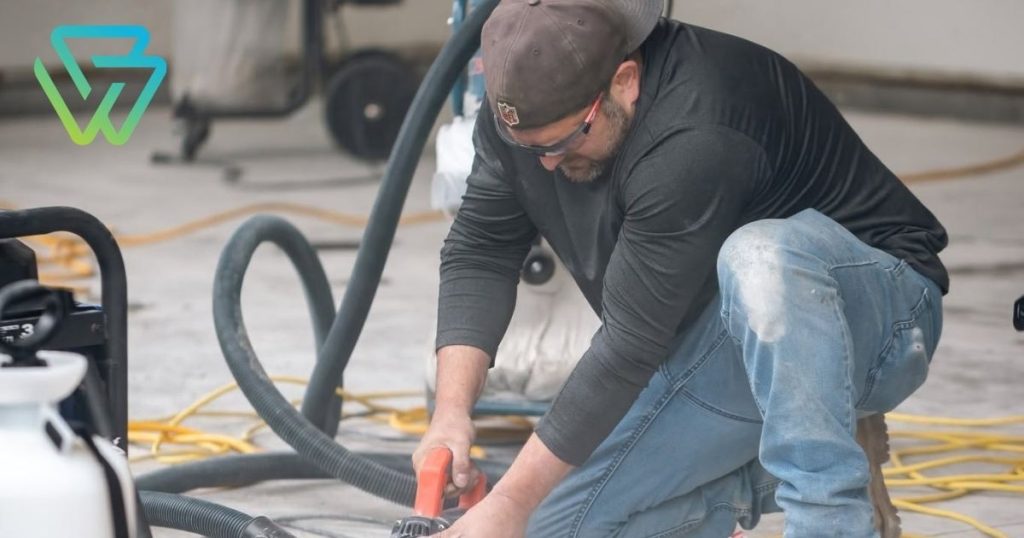
Yes, a one-day garage floor coating in Ohio is possible, but “installed in one day” does not always mean “drive your car onto it tonight.” Fast-curing polyurea and polyaspartic systems can allow professional crews to prepare the concrete, repair minor defects, apply the coating system, broadcast decorative flakes, and install a protective topcoat within a single working day.
Traditional epoxy systems often require more time between layers and before vehicle traffic.
The important question is therefore not just, “Can my floor be coated in one day?” It is, “What coating system is being installed, how is the concrete being prepared, and exactly when can the finished floor safely return to service?”
What Does “One-Day Garage Floor” Actually Mean?
The term can be confusing because contractors may use it differently.
In most cases, a one-day installation means the crew completes the coating work during one visit. Concrete preparation begins in the morning, followed by repairs, coating application, decorative flake, and the final protective layer.
It does not necessarily mean every garage is ready for immediate vehicle traffic when the installer leaves.
The coating still needs to cure.
Depending on the product, temperature, humidity, and system, homeowners may be able to walk on the floor later that day or the following day while waiting longer before parking a vehicle.
Any contractor advertising one-day installation should explain both the installation schedule and return-to-service schedule.
How A 1-Day Polyaspartic Install Works
A 1-day polyaspartic install is possible largely because these materials cure much faster than traditional epoxy.
Professional installation usually begins with mechanical concrete preparation. Diamond grinding removes weak surface material, previous coatings where necessary, and creates a profile for adhesion.
Cracks, pits, and damaged areas are then addressed according to the condition of the slab.
Once preparation is complete, the coating process can move quickly.
A fast-curing base material is applied, decorative flakes may be broadcast into the wet coating, excess flake is removed after curing, and a polyaspartic clear coat is installed over the surface.
Rapid chemical curing allows these steps to happen much closer together than they could with many conventional epoxy systems.
One-Day Should Never Mean One-Step
A legitimate fast installation still involves several stages.
The contractor does not simply clean the floor and apply one thick coat.
Professional garage floors depend on concrete profiling, cleaning, repairs, base-coat installation, proper flake coverage when applicable, and a protective wear layer.
Fast-curing chemistry compresses the waiting periods between those stages.
It should not eliminate the stages themselves.
Homeowners should be cautious when “one-day” seems to mean skipping preparation to get the crew out faster.
A floor installed quickly because the chemistry cures fast can perform well. A floor installed quickly because the preparation was rushed is a completely different proposition.
Why Traditional Epoxy Usually Takes Longer
Epoxy generally cures more slowly than polyaspartic and many polyurea materials.
That slower reaction is not necessarily a weakness.
Epoxy’s longer working time can help installers spread material evenly, achieve good coverage, and complete decorative broadcasts without racing against a very short cure window.
The tradeoff is time.
A two-day epoxy process may involve preparing and coating the floor on the first day, returning for additional layers on the second day, and then allowing further curing before vehicles return.
Some systems require even longer depending on coating chemistry, temperature, slab condition, and the number of layers being installed.
Two-Day Installation Can Be A Good Thing
Speed is convenient, but homeowners should not assume that a two-day floor is inferior to a one-day floor.
Some coating systems are intentionally designed around longer cure windows.
An epoxy base may need additional curing before the next layer. A moisture-mitigation system can add another stage. Extensive repairs can also turn what might normally be a one-day project into a multi-day installation.
The correct schedule should be dictated by the floor and the product specifications.
Taking another day because the system requires it is far better than forcing a coating into an unrealistic installation timeline.
Garage Floor Cure Time Is Different From Dry Time
A floor may feel dry before it has reached enough strength for normal use.
This distinction is important when discussing garage floor cure time.
Coatings undergo a chemical curing process. As curing progresses, the material develops hardness, adhesion, chemical resistance, and mechanical strength.
Different activities place different levels of stress on the floor.
Walking in clean socks or soft shoes creates relatively little pressure. Moving a heavy workbench is more demanding. Parking a vehicle introduces thousands of pounds, hot tires, turning forces, and concentrated pressure.
For this reason, a coating may be ready for foot traffic long before it is ready for cars.
When Can I Park On New Epoxy?
Homeowners commonly ask, “When can I park on new epoxy?”
The correct answer depends on the exact product installed.
Some epoxy systems may require several days before vehicle traffic is recommended. Cooler temperatures can extend cure time further because chemical reactions generally slow as temperatures drop.
Moving the car onto the floor too early can create tire impressions, scuffs, discoloration, or other damage before the coating reaches adequate strength.
Do not assume that because the floor feels hard under your hand it is ready for a vehicle.
Follow the cure schedule provided for the specific coating system.
When Can You Park On A Polyaspartic Floor?
Polyaspartic coatings generally achieve usable strength much faster than traditional epoxy.
This is one of their biggest advantages for residential garages.
Depending on the system and conditions, light foot traffic may be allowed relatively quickly, while vehicle traffic may be permitted the following day or according to another product-specific timeframe.
No universal number applies to every polyaspartic coating.
Formulations vary considerably.
A professional installer should give the homeowner clear instructions for walking, returning stored belongings, positioning heavy equipment, and parking vehicles.
Temperature Can Change The Schedule In Ohio
Ohio weather makes cure-time estimates more complicated.
A coating installed on a warm summer slab may cure very differently from the same material installed when concrete temperatures are much lower.
Air temperature is only part of the equation.
Concrete can remain cold after overnight temperatures drop, particularly during fall, winter, and early spring. An installer may warm the garage air while the slab itself is still significantly cooler.
Cold temperatures can slow some products. High heat can shorten working time for fast-curing materials.
The contractor therefore needs to consider actual installation conditions rather than promising the same cure schedule year-round.
Humidity Can Matter Too
Temperature receives most of the attention, but humidity can also affect coating installation.
Different resin chemistries respond differently to moisture in the air and concrete. Some products have application limits related to humidity or dew point.
Condensation can be especially problematic.
If the concrete surface temperature approaches the dew point, invisible moisture may form on the slab. Applying coating over condensation can interfere with adhesion or appearance.
Professional crews should consider environmental conditions before and during installation, even when the calendar says the project needs to be finished that day.
Concrete Repairs Can Turn A One-Day Job Into A Longer Project
Not every garage is ready for a standard fast installation.
A relatively sound floor with a few stable cracks may be straightforward. A slab with extensive spalling, damaged control joints, deep oil contamination, moisture problems, failing old coatings, or substantial repairs can require significantly more work.
Old coating removal alone can add considerable preparation time.
If the previous material is thick, gummy, or heavily bonded in some areas but loose in others, grinding back to clean concrete may take far longer than preparing an uncoated slab.
A professional should prioritize getting the substrate right rather than preserving a one-day marketing promise.
Moisture Problems May Require Another Step
Moisture vapor is another reason a garage floor may need more than a standard one-day system.
Concrete can transmit moisture even when the surface appears completely dry.
If testing or slab conditions indicate excessive moisture, the installer may recommend a moisture-mitigation product before the decorative floor system is installed.
Adding the correct primer or mitigation layer can change the installation schedule.
Skipping it just to keep the project within one day can create a much larger problem later if the coating begins blistering or delaminating.
Old Garage Floor Paint Changes The Timeline
An existing coating must be evaluated before new material goes down.
If old garage paint is already peeling, the loose material cannot simply be buried beneath a professional floor.
The installer needs to remove unsound coating and determine whether any remaining material is suitable to stay.
In many cases, grinding everything back to concrete provides a more predictable foundation.
Removal takes time and creates dust that needs to be captured properly.
A garage that looks like an easy one-day project in photographs can become more involved once preparation starts.
Why Fast Garage Floor Installation In Cleveland Is Popular
A fast garage floor installation in Cleveland has obvious practical benefits.
Many homes rely heavily on the garage. Removing vehicles, lawn equipment, tools, storage bins, freezers, bikes, and other belongings for several days can be inconvenient.
A rapid-cure floor reduces that disruption.
Cleveland-area winters make garage downtime even more inconvenient because leaving vehicles outdoors can mean dealing with snow and ice.
Fast systems solve a real problem.
They simply need to achieve that speed through appropriate coating chemistry rather than through shortcuts.
Fast Cure Products Require Experienced Installation
Polyaspartic’s speed benefits homeowners, but it can make installation less forgiving for the crew.
Once mixed, fast-curing coatings can have a relatively short working window.
Installers must spread material evenly, maintain consistent coverage, work edges, coordinate flake broadcasting, and avoid leaving marks before the coating begins setting.
Heat can shorten that working time even further.
A slow installer may end up with roller lines, uneven thickness, visible transitions, or areas that begin curing before the crew completes the section.
Fast curing is therefore a performance feature, but it also demands efficient installation.
Is A One-Day Floor Less Durable?
Not necessarily.
The number of calendar days spent installing a floor does not determine its durability.
A properly prepared one-day polyaspartic or polyurea-based system can provide excellent long-term performance. A multi-day epoxy system can also perform extremely well.
Either can fail if concrete preparation is inadequate.
Durability depends far more on substrate condition, surface profiling, moisture management, coating quality, system thickness, installation technique, and suitability for the garage.
A three-day coating installed badly does not become durable simply because it took longer.
Ask What The Base Coat Actually Is
Not every “polyaspartic garage floor” is made entirely from polyaspartic material.
Some systems use a polyurea base with a polyaspartic topcoat. Others use epoxy underneath and polyaspartic over the decorative flake. Some use polyaspartic materials throughout.
None of those designs is automatically wrong.
Homeowners should simply understand what they are buying.
Ask what product bonds directly to the concrete, what material protects the surface, and why those products were selected.
The answer gives you far more useful information than the phrase “one-day floor.”
Ask How The Concrete Will Be Prepared
The best way to evaluate a fast installation may be to ignore cure speed for a moment and ask about preparation.
Will the slab be mechanically ground?
How will existing coatings be removed? How are cracks treated? What happens if oil contamination is found? What happens if moisture is suspected?
A contractor with clear answers is thinking about the floor as a system.
A contractor whose entire pitch revolves around finishing before dinner may be focusing on the wrong part of the project.
One-Day Installation vs. One-Day Return To Service
These terms should never be treated as interchangeable.
One-day installation means the crew can complete the flooring system in one working day.
One-day return to service suggests the garage can actually begin returning to normal use within roughly that period.
A floor may meet one definition without meeting the other.
Homeowners should specifically ask when they can walk on the surface, return storage, move heavy equipment, and park their vehicles.
Clear expectations prevent accidental damage during the most vulnerable part of the curing process.
So, Can Your Ohio Garage Floor Really Be Coated In One Day?
For many garages, yes.
Modern polyurea and polyaspartic systems make a professional one-day garage coating completely realistic. A sound slab with manageable repairs can often be prepared and coated within a single visit.
Some floors need longer.
Traditional epoxy systems, moisture mitigation, extensive crack repairs, old coating removal, contamination, or significant concrete damage can extend the project beyond one day.
The honest answer is therefore straightforward: one-day installation is a legitimate option, but it should be the result of fast-performing materials and an efficient professional process, not a deadline that overrides what the concrete actually needs.
For Ohio homeowners, the best garage floor is not necessarily the one installed fastest.
It is the one prepared correctly, coated with the right system, and given enough cure time before the first vehicle rolls across it.
Frequently Asked Questions
Can a garage floor really be coated in one day?
Yes. Fast-curing polyurea and polyaspartic systems can allow preparation and coating to be completed within one working day on suitable garage floors. Concrete condition and repair requirements can extend the schedule.
How long before I can walk on a new garage coating?
Walking time depends on the specific coating and environmental conditions. Fast-curing systems may allow foot traffic relatively quickly, while traditional epoxy can need longer. Always follow the installer’s product-specific cure instructions.
When can I park on a newly coated garage floor?
Vehicle return time varies by system. Polyaspartic floors can often return to vehicle service substantially faster than conventional epoxy, while many epoxy systems need several days. Parking too early can damage a coating that has not fully developed sufficient strength.
Is a two-day epoxy floor better than a one-day polyaspartic floor?
Not automatically. Installation duration does not determine quality. Both systems can perform well when the concrete is correctly prepared, and the coating chemistry is appropriate for the garage.
Why would a professional need more than one day for my garage?
Existing coating removal, moisture mitigation, extensive concrete repairs, contamination, cold temperatures, or a multi-stage epoxy system can require additional time. Extending the project is appropriate when the slab needs more preparation.
Are one-day garage coatings good for Ohio winters?
A quality fast-curing system can work very well in Ohio garages when properly installed. Resistance to road salt, wet vehicles, abrasion, and seasonal temperature changes depends on the complete coating system and concrete preparation, not installation speed alone.